Knee Replacement Surgery in Jaipur — Best Knee Surgeon | Dr. Harish Talreja

Knee Replacement Surgery in Jaipur

  1. Home
  2. Services
  3. Joint Replacement
  4. Knee Replacement
Knee replacement surgery in Jaipur — total and partial knee arthroplasty for arthritis
Knee Arthroplasty in Jaipur

Knee Replacement Surgery in Jaipur

Knee replacement surgery is one of the most successful orthopaedic procedures performed worldwide — providing lasting pain relief and restored function for patients with severe knee arthritis, joint damage, or deformity.

Dr. Harish Talreja is among the most experienced knee replacement surgeons in Jaipur, having performed over 10,000 knee replacement procedures at Manipal Hospital Jaipur. As one of the leading orthopaedic doctors in Jaipur, his practice covers the full spectrum of knee replacement options — from total knee replacement (TKR) for advanced multi-compartment arthritis to unicondylar (partial) knee replacement for isolated joint disease.

10,000+Knee Replacements
15+Years Experience
Day 1Walking After Surgery
20 Yrs+Implant Longevity
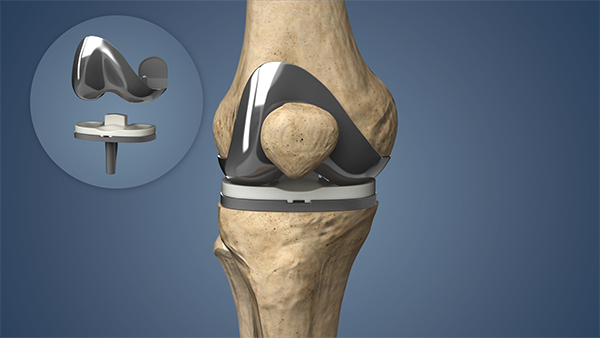
Knee replacement implant components — femoral tibial patellar polyethylene illustration
Overview

What is Knee Replacement Surgery?

Knee replacement surgery (knee arthroplasty) is a procedure in which the damaged cartilage and bone surfaces of the knee joint are removed and replaced with precision-fitted artificial components made of medical-grade metal alloys, ceramic, and high-density polyethylene.

The knee joint is formed by the femur (thigh bone), tibia (shin bone), and patella (kneecap). In knee replacement, the worn surfaces are resurfaced with implant components — eliminating the bone-on-bone contact that causes severe arthritis pain.

Surgery is recommended when joint damage is severe enough that conservative treatments — physiotherapy, medications, and injections — no longer provide adequate pain relief or functional improvement.

Depending on how much of the knee is affected, Dr. Talreja recommends either total knee replacement or unicondylar (partial) knee replacement — explained in detail below.

Surgical Options

Types of Knee Replacement Surgery

The right procedure depends on which parts of your knee are damaged. Dr. Talreja evaluates each patient with clinical examination and weight-bearing X-rays to recommend the most appropriate option.

Total Knee Replacement

TKR — Most Common Procedure

All three compartments of the knee — medial, lateral and patellofemoral — are fully resurfaced. The definitive solution for advanced multi-compartment arthritis, deformity correction, and cases with compromised ligaments.

  • All three compartments replaced
  • Corrects varus and valgus deformity
  • Implants last 15 to 20+ years
  • Highest patient satisfaction rate
Best for: Advanced multi-compartment arthritis Explore Total Knee Replacement

Unicondylar Knee Replacement

UKR — Partial Replacement

Only the single damaged compartment — most commonly the medial (inner) side — is resurfaced. Healthy bone, cartilage and ligaments in the rest of the knee are preserved, offering a more natural feel and faster recovery.

  • Less invasive than total replacement
  • Smaller incision, shorter recovery
  • Preserves more natural knee tissue
  • Suitable for single-compartment disease
Best for: Isolated single-compartment arthritis Explore Unicondylar Replacement

Fast-Track Knee Replacement

Enhanced Recovery Protocol

An enhanced recovery after surgery (ERAS) programme that combines optimised anaesthesia, early Day 1 mobilisation, multimodal pain control, and intensive physiotherapy — significantly reducing hospital stay and speeding up return to daily life.

  • Walk on Day 1 post-surgery
  • Shorter hospital admission
  • Reduced post-operative pain
  • Faster return to independence
Best for: Motivated, fit patients Explore Fast-Track Protocol
FactorTotal Knee (TKR)Partial Knee (UKR)
Compartments replacedAll threeOne only
Arthritis extentMulti-compartmentSingle compartment
Deformity correction✓ Full correction✗ Limited
Incision size8–12 cm5–8 cm
Hospital stay3–5 days2–3 days
Full recovery3–6 months6–10 weeks
Implant longevity15–20+ years10–15+ years
Indications

Who Needs Knee Replacement Surgery?

Knee replacement is recommended when knee joint damage causes severe pain that significantly limits daily activities and no longer responds to non-surgical treatment.

Severe Knee Osteoarthritis

The most common indication. Advanced cartilage wear causes bone-on-bone contact, severe pain, stiffness and deformity that prevents normal walking or stair climbing.

Rheumatoid Arthritis

Autoimmune joint inflammation progressively destroys knee cartilage and bone — replacement is recommended when deformity and pain become severe and unresponsive to medical management.

Post-Traumatic Arthritis

Prior knee fracture, ligament injury, or meniscus damage can cause accelerated cartilage loss over time, eventually requiring knee replacement surgery.

Varus / Valgus Deformity

Bow-leg or knock-knee deformity with severe arthritis causes abnormal joint loading and worsening pain — corrected with knee replacement and realignment.

Failed Conservative Treatment

No adequate relief from physiotherapy, anti-inflammatory medications, weight management, or corticosteroid injections over six months or more.

Severe Functional Limitation

Knee pain consistently prevents walking short distances, climbing stairs, sleeping comfortably, or performing basic daily tasks despite treatment.

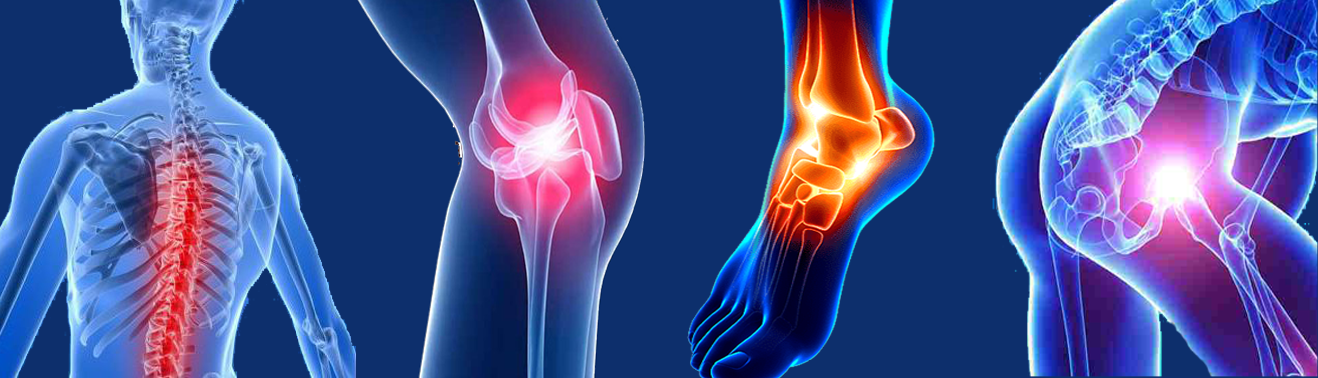
Symptoms of severe knee arthritis indicating need for knee replacement surgery Jaipur
Warning Signs

Signs You May Need Knee Replacement

These symptoms suggest advanced knee arthritis requiring surgical evaluation. Clinical assessment and X-rays are always needed to confirm diagnosis and severity.

Severe knee pain limiting walking distance

Cannot walk more than a short distance, climb stairs, or get up from a chair without significant pain.

Persistent stiffness and reduced movement

Difficulty fully straightening or bending the knee — worse in the morning or after prolonged sitting.

Chronic swelling unresponsive to treatment

Persistent joint swelling not settling with rest, ice, elevation, or anti-inflammatory medication.

Progressive knee deformity

Worsening bow-leg or knock-knee alignment causing uneven gait and visible change in the leg over time.

No relief despite 6+ months of conservative care

Physiotherapy, medications, bracing and injections tried without achieving adequate improvement.

Knee replacement surgery being performed at Manipal Hospital Jaipur by Dr Harish Talreja
Surgical Process

How Knee Replacement Surgery is Performed

The procedure takes 1 to 2 hours. Most patients receive spinal anaesthesia and begin walking on the same day as surgery.

01

Pre-Operative Assessment

Weight-bearing X-rays, blood tests and anaesthesia review. Implant sizing and alignment are templated pre-operatively for each individual patient.

02

Anaesthesia

Spinal anaesthesia preferred for most patients. A tourniquet minimises blood loss. Strict sterile technique is maintained throughout the procedure.

03

Bone Resection and Implant Fixation

Precisely measured damaged bone and cartilage are removed. Implant components are trial-fitted, alignment confirmed, then permanently fixed with bone cement or press-fit technique.

04

Day 1 Rehabilitation

Physiotherapy begins on Day 1 post-surgery — ankle pumps, quadriceps exercises, and standing with support. Most patients take their first steps the same day.

Rehabilitation

Recovery After Knee Replacement Surgery

A structured physiotherapy programme — starting on Day 1 — is the cornerstone of successful knee replacement recovery. Consistent adherence to rehabilitation is the most important factor for the best long-term outcome.

Most patients are surprised by how quickly they recover. The Day 1 mobilisation protocol at Manipal Hospital Jaipur ensures faster rehabilitation and better functional results compared to traditional approaches.

Day 1

Walking with support after surgery

4–6 Wks

Walking without aids independently

3–6 Mths

Full functional recovery achieved

20 Yrs+

Expected implant lifespan

Recovery and physiotherapy after knee replacement surgery in Jaipur
Informed Decision

Risks and Considerations

Knee replacement has over 95% patient satisfaction in published long-term studies. As with all major surgery, potential risks exist. Dr. Talreja discusses these fully during consultation so every patient makes a completely informed decision.

Deep Vein Thrombosis (DVT)

Blood-thinning medication and Day 1 mobilisation significantly reduce this risk. Compression stockings are used routinely post-surgery.

Infection

Prophylactic antibiotics administered pre-operatively. Strict sterile technique maintained throughout. Deep infection rate is less than 1% in experienced surgical hands.

Implant Wear or Loosening

Modern implants are engineered for decades of durability. Maintaining healthy weight and following post-operative activity guidelines significantly extends implant life.

Post-Operative Stiffness

Diligent early physiotherapy is essential. Full compliance with the rehabilitation programme consistently produces the best range of motion outcomes.

Dr Harish Talreja explaining knee replacement surgery risks and benefits to patient in Jaipur
Dr Harish Talreja — best knee replacement surgeon in Jaipur with 10000+ surgeries
Why Choose Dr. Harish Talreja

Best Knee Replacement Surgeon in Jaipur

With 10,000+ knee replacement procedures and 15+ years of specialised orthopaedic practice, Dr. Harish Talreja delivers exceptional outcomes — combining precision surgical planning, advanced implant selection, and a Day 1 rehabilitation approach at Manipal Hospital Jaipur.

00K+

Knee Replacements Performed

15+

Years Orthopaedic Experience

Day 1

Walking After Surgery

  • 10,000+ knee replacement surgeries with consistently high patient satisfaction
  • Advanced fellowship training in joint replacement at AIIMS Jodhpur and Medanta Gurgaon
  • Consultant Orthopaedic Surgeon at Manipal Hospital Jaipur — NABH-accredited
  • Centre of Excellence Fellowship — Rajasthan Orthopaedic Surgeons Association (2018)
  • Personalised implant selection and pre-operative templating for every patient
  • Day 1 physiotherapy protocol for faster mobilisation and superior outcomes
  • Insurance assistance: CGHS, RGHS and corporate health insurance schemes

Ready to Walk Without Knee Pain?

Consult Dr. Harish Talreja — one of Jaipur's most experienced knee replacement surgeons — for an accurate diagnosis and a personalised treatment plan.

Frequently Asked Questions

Knee Replacement Surgery — Common Questions

The cost of knee replacement surgery in Jaipur varies based on several factors — whether it is total or partial replacement, the implant brand and grade selected, the hospital facility, duration of stay, and associated tests or physiotherapy. An accurate, personalised cost estimate is provided after consultation and clinical assessment with Dr. Talreja. Most patients are eligible for treatment under CGHS, RGHS (Rajasthan government employees), or major corporate health insurance schemes. Please enquire at the time of booking for specific guidance.

Dr. Harish Talreja is among the most experienced knee replacement surgeons in Jaipur, having performed over 10,000 knee replacement procedures. He is a Consultant Orthopaedic Surgeon at Manipal Hospital Jaipur — a NABH-accredited facility — and holds a Centre of Excellence Fellowship from the Rajasthan Orthopaedic Surgeons Association. His training includes advanced joint replacement fellowships at AIIMS Jodhpur and Medanta Gurgaon.

Most patients walk with a walker on Day 1 after surgery. Walking independently without aids is typically achieved within 4 to 6 weeks. Return to most daily activities — office work, light household tasks, driving — occurs around 6 to 8 weeks. Full functional recovery, including stair climbing and extended walking, is generally achieved by 3 to 6 months. Consistent physiotherapy is the most important factor in achieving the best outcome.

Neither is universally better — each is appropriate for different conditions. Total knee replacement is recommended when all three compartments of the knee are damaged, or when deformity correction is needed. Partial (unicondylar) replacement is a less invasive option suitable only for isolated single-compartment arthritis with intact cruciate ligaments — offering faster recovery for carefully selected patients. Dr. Talreja evaluates each patient individually to recommend the most appropriate procedure.

Knee replacement is most commonly performed in patients between 60 and 80 years of age, though it can be recommended at any age when severe arthritis significantly limits quality of life. For younger patients, factors such as expected activity level and implant lifespan are carefully considered. The decision is always based on the degree of joint damage and the impact on daily life — not age alone.

Yes. Knee replacement surgery is covered by most major health insurance plans in India, including CGHS and RGHS schemes for government employees and pensioners in Rajasthan. Coverage terms, implant categories covered, and pre-authorisation requirements vary by insurer. The team at Manipal Hospital Jaipur can assist with insurance pre-authorisation documentation. Please call or enquire when booking your consultation.

Yes. Stair climbing is typically introduced during the physiotherapy programme within 2 to 4 weeks of surgery. By 3 months, most patients can climb stairs comfortably and with confidence. The technique used — leading with the stronger leg going up and the operated leg coming down — is taught during the in-hospital rehabilitation programme.
Find Us

Clinic Locations in Jaipur

Divya Advance Joint Care Clinic

Shop No. 2/34, A Block

Vaishali Estate Township, Gandhi Path West

Jaipur – 302021

Book Appointment ›

Manipal Hospital Jaipur

Sector 5, Vidyadhar Nagar

Jaipur, Rajasthan

Book Appointment ›
Our Google Reviews

What Our Patients Are Saying About Us

Decorative abstract background shape
Decorative curved background design element
Our Social Media Posts

Our Social Media Posts

Get In Touch

Manipal Hospital

CONTACT US

Get in Touch

Thank you! Message sent successfully.
Error occurred. Please try again later.
Illustration of medical professional standing beside contact section
Decorative abstract shape beside contact section

Call Us Today for Consultations

Feel free to pay us a visit. You won’t regret it for sure.
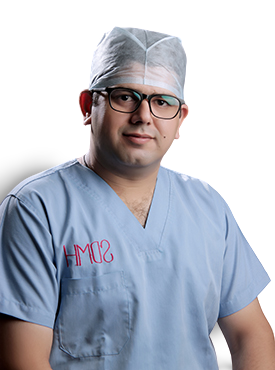
Dr Harish Talreja orthopedic specialist
Decorative leaf illustration
Decorative airplane illustration