Hip pain from arthritis, avascular necrosis (AVN), fractures, or joint degeneration can make every step painful and strip away independence. When conservative treatment no longer provides relief, hip replacement surgery offers a lasting solution that restores pain-free movement and quality of life.
Dr. Harish Talreja is among the most experienced hip replacement surgeons in Jaipur, having performed over 8,000 hip replacement procedures at Manipal Hospital Jaipur. As one of the leading orthopaedic specialists in Jaipur, he delivers international-standard hip replacement outcomes with a Day 1 mobilisation approach for faster recovery.
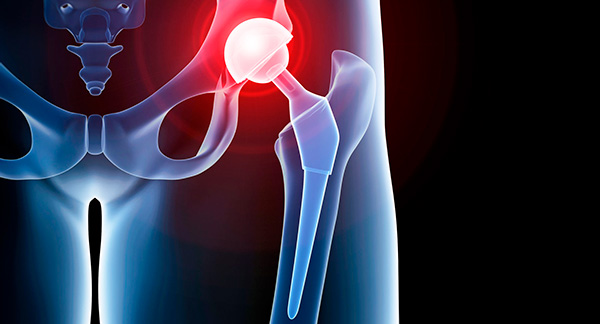
Hip replacement surgery (hip arthroplasty) is a procedure in which the damaged surfaces of the hip joint are removed and replaced with precision-fitted artificial components. The hip is a ball-and-socket joint — the femoral head (ball) at the top of the thigh bone sits within the acetabulum (socket) in the pelvis.
In hip replacement, the damaged femoral head is removed and replaced with a metal stem with an artificial femoral head, while the acetabular socket is resurfaced with a metal cup and a smooth polyethylene or ceramic liner — replicating the natural hip's smooth, frictionless motion.
The procedure eliminates bone-on-bone contact, restores hip mechanics, and allows patients to walk comfortably and independently again.
Metal stem inserted into the femur to anchor the implant and support the artificial femoral head
Metal or ceramic ball that replaces the natural femoral head and articulates with the acetabular cup
Metal shell that replaces the hip socket (acetabulum), providing the foundation for the bearing surface
Polyethylene, ceramic or metal liner inside the acetabular cup providing smooth, low-friction articulation
The appropriate hip replacement procedure depends on the patient's age, diagnosis, degree of joint damage, and activity level. Dr. Talreja assesses each case individually to recommend the most suitable option.
Both the femoral head and acetabular socket are replaced with precision-fitted implants. The gold-standard treatment for advanced hip arthritis, providing complete, lasting pain relief and restoration of full hip function.
Only the femoral head (ball) is replaced while the natural acetabular socket is preserved. Most commonly used in elderly patients with displaced hip fractures where total replacement carries higher surgical risk.
Revision hip replacement is performed when a previous hip implant wears out, becomes loose, or fails. A more complex procedure requiring specialised revision implant systems and expertise in managing bone loss around the previous implant.
Modern hip implants offer multiple fixation methods. Dr. Talreja selects the most appropriate option based on each patient's age, bone quality, activity level and lifestyle requirements.
Bone cement (polymethylmethacrylate) is used to secure the implant components to the bone. Provides immediate stability — most commonly used in elderly patients with softer bone quality or osteoporosis.
The implant has a porous surface designed for bone to grow into over time, creating a biological bond. Preferred in younger, more active patients with good bone quality for long-term durability.
A combination approach — typically a cemented femoral stem for immediate stability and an uncemented acetabular cup for biological fixation — balancing the advantages of both methods for appropriate patients.
The most widely used bearing surface — metal femoral head articulating with a polyethylene liner. Highly cross-linked polyethylene significantly reduces wear and extends implant life. Excellent long-term track record.
The lowest wear rate of any bearing combination. Ideal for younger, more active patients requiring maximum implant longevity. Produces the least wear debris, reducing the risk of long-term loosening.
Ceramic femoral head with polyethylene liner — combining the hardness and scratch resistance of ceramic with the durability and flexibility of cross-linked polyethylene. A reliable intermediate option.
The procedure takes 1 to 2 hours under spinal or general anaesthesia. Most patients begin walking the same day as surgery using a physiotherapy-guided Day 1 protocol.
X-rays, blood tests, cardiac assessment and anaesthesia review. Implant type, size and approach (posterior, lateral or anterior) are planned individually for each patient.
Spinal anaesthesia preferred. The surgical approach — posterior, anterolateral, or direct anterior — is selected based on patient anatomy, body composition, and surgeon preference.
The damaged femoral head is carefully removed. The acetabulum is prepared and the cup implanted. A metal stem is placed in the femur and the artificial femoral head attached. Alignment and stability are confirmed before closure.
Physiotherapy begins on Day 1 — sitting, standing, and walking with a walker. Hip precaution instructions are provided. Most patients are discharged within 3 to 5 days.
Cost transparency is important to us. The ranges below reflect typical costs based on procedure type and implant grade — an accurate personalised estimate is always provided after consultation.
Costs include surgery, implant, hospital stay and standard post-operative care. Actual costs depend on implant choice, fixation method and duration of stay.
Hip replacement is one of the most successful elective procedures in medicine — consistently delivering significant improvement in pain, mobility, and quality of life.
Most patients experience complete or near-complete elimination of hip pain — allowing comfortable walking, sleeping and daily activity within weeks of surgery.
Restored range of motion enables patients to walk freely, climb stairs, dress independently, get in and out of vehicles, and participate in social and recreational activities.
Elimination of the antalgic limp restores a more normal, symmetrical walking pattern — improving balance, reducing the risk of falls, and reducing strain on the opposite hip and knee.
Modern hip implants are designed to last 15 to 25 years or longer. Over 90% of hip replacements function well at 15 to 20 years in published registry data.
With 8,000+ hip replacement procedures performed and 15+ years of specialised orthopaedic practice, Dr. Harish Talreja delivers consistently excellent hip replacement outcomes — combining precision surgical technique, appropriate implant selection, and a Day 1 rehabilitation protocol at Manipal Hospital Jaipur.
Hip Replacements Performed
Years Orthopaedic Experience
Walking After Surgery
Consult Dr. Harish Talreja for an accurate assessment, personalised treatment plan and clear guidance on whether hip replacement is the right option for you.
Shop No. 2/34, A Block
Vaishali Estate Township, Gandhi Path West
Jaipur – 302021
Book Appointment ›I had a good experience consulting with the doctor and he's really well mannered.
Feel free to pay us a visit. You won’t regret it for sure.