AVN Hip Treatment in Jaipur — Avascular Necrosis Specialist | Dr. Harish Talreja

AVN Hip Treatment in Jaipur

  1. Home
  2. Services
  3. Hip Replacement
  4. AVN Hip Treatment
Decorative page header shape element
AVN hip treatment in Jaipur — avascular necrosis of femoral head treatment from core decompression to total hip replacement
Avascular Necrosis · Osteonecrosis · Jaipur

AVN Hip Treatment in Jaipur

Avascular necrosis (AVN) of the hip — also called osteonecrosis of the femoral head — is a serious condition where the blood supply to the hip bone is disrupted, causing bone death and progressive joint collapse. Early diagnosis and stage-appropriate treatment are critical to preserving the hip joint or restoring pain-free function.

Dr. Harish Talreja is an experienced orthopaedic specialist in Jaipur offering the complete spectrum of AVN hip treatment — from joint-preserving procedures such as core decompression in early-stage disease to total hip replacement for advanced AVN with femoral head collapse.

Early diagnosis is critical. AVN progresses rapidly without treatment — most untreated cases develop femoral head collapse within 2 to 3 years. MRI is essential for early detection before X-ray changes appear. Do not delay — early-stage AVN can often be treated with joint-preserving surgery.

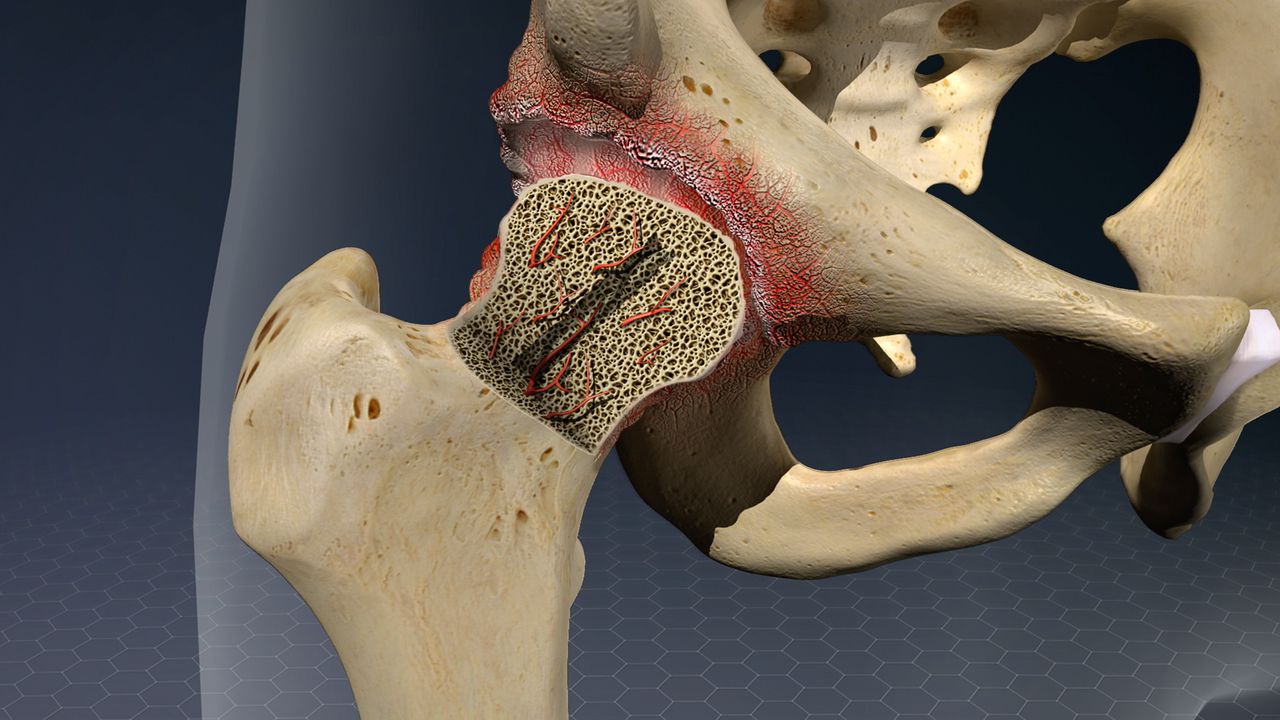
Avascular necrosis of hip — femoral head bone death and collapse illustration
Understanding AVN

What is Avascular Necrosis of the Hip?

Avascular necrosis (AVN) of the hip — also known as osteonecrosis of the femoral head (ONFH) — is a condition where the blood supply to the femoral head (the ball of the hip joint) is disrupted. Without adequate blood flow, bone cells die, the structural integrity of the femoral head weakens, and the bone eventually collapses under normal body weight.

As the femoral head collapses and the articular cartilage surface deteriorates, the hip joint becomes severely arthritic — causing progressive pain, stiffness, and loss of mobility that significantly affects quality of life.

AVN affects people of all ages but is particularly common between 30 and 60 years — meaning many patients are in the prime of their working and active lives when the condition strikes.

Blood Supply Disruption

The femoral head receives blood from small arteries that are vulnerable to interruption by trauma, medication, or systemic disease

Bone Cell Death

Without blood supply, bone cells (osteocytes) die — causing the trabecular bone structure to weaken over weeks to months

Femoral Head Collapse

The weakened subchondral bone collapses under body weight — causing the articular surface to flatten or fragment (crescent sign on X-ray)

Secondary Arthritis

Cartilage loss and joint incongruity from head collapse leads to severe secondary osteoarthritis of the entire hip joint

Causes

Causes of Avascular Necrosis of the Hip

AVN of the hip can result from a variety of conditions and exposures that disrupt the delicate blood supply to the femoral head. Identifying the underlying cause helps guide treatment and prevent progression in the opposite hip.

Corticosteroid Use

Long-term or high-dose steroid therapy (for asthma, kidney disease, autoimmune conditions, organ transplants) is the most common non-traumatic cause of AVN. Even short high-dose courses can trigger AVN.

Excessive Alcohol Consumption

Chronic heavy alcohol use is the second most common cause — alcohol is thought to increase fat deposits in blood vessels and disrupt blood supply to the femoral head.

Hip Fracture or Dislocation

Traumatic injury to the hip — particularly femoral neck fracture or hip dislocation — can directly rupture the blood vessels supplying the femoral head, causing post-traumatic AVN.

Sickle Cell Disease

Abnormal sickled red blood cells block small blood vessels — making sickle cell disease one of the leading causes of bilateral AVN in young patients.

Blood Clotting Disorders

Hypercoagulable conditions (thrombophilia, antiphospholipid syndrome) cause microvascular thrombosis in the small arteries supplying the femoral head.

Radiation Therapy

Radiation to the pelvis or hip region (for cancer treatment) can damage blood vessels, leading to radiation-induced osteonecrosis of the femoral head.

Gaucher's Disease

This metabolic storage disorder causes abnormal fat accumulation in bone marrow that compromises the blood supply to the femoral head.

Idiopathic (Unknown Cause)

In some cases, no identifiable cause is found — idiopathic AVN. The condition may still progress and requires the same stage-appropriate treatment as AVN with known causes.

Decorative orthopaedic icon element
Decorative medical icon element
Symptoms of avascular necrosis of hip — hip and groin pain with weight bearing
Warning Signs

Symptoms of AVN of the Hip

AVN symptoms develop gradually and are often dismissed as muscle strain or minor injury — leading to dangerous delays in diagnosis. If you have any known risk factors, early MRI assessment is strongly recommended even before significant pain develops.

Hip or groin pain with weight bearing

The earliest symptom — typically felt in the groin or inner thigh when standing, walking or climbing stairs. May initially be intermittent.

Pain that worsens progressively over time

As the femoral head weakens and collapses, pain becomes constant, severe, and present at rest and at night — significantly disrupting sleep.

Stiffness and reduced hip movement

Difficulty rotating the hip, putting on shoes and socks, getting in and out of a car, or crossing the legs — due to joint space loss and secondary arthritis.

Limping or antalgic gait

Progressive hip pain causes an involuntary lean toward the affected side while walking to reduce joint loading — an antalgic gait pattern.

Shortening of the affected leg (advanced AVN)

Significant femoral head collapse in Stage 3–4 can cause measurable shortening of the affected limb and marked pelvic tilt.

Staging System

AVN Hip — Stages and What They Mean

The Ficat-Arlet or ARCO staging system is used to classify AVN of the hip. The stage at diagnosis directly determines the treatment options available — earlier diagnosis means more treatment options and better outcomes.

1

Stage 1 — Pre-Collapse

X-ray appears normal. MRI shows early signal changes in the femoral head indicating bone death. No structural collapse has occurred.

🟢 Joint-Preserving Surgery Possible
2

Stage 2 — Sclerosis / Cysts

X-ray shows sclerosis (increased density) or cyst formation in the femoral head. Femoral head shape is still maintained. No crescent sign.

🟡 Joint Preservation Often Possible
3

Stage 3 — Subchondral Collapse

Crescent sign visible on X-ray — subchondral bone has collapsed. The articular surface is no longer spherical. Hip joint space still maintained.

🟠 THR Usually Required
4

Stage 4 — Joint Space Loss

Complete femoral head collapse with secondary hip osteoarthritis. Joint space lost. Severe pain and disability. Hip replacement is the definitive treatment.

🔴 Total Hip Replacement

Why MRI is Essential for AVN Diagnosis

MRI detects AVN at Stage 1 — before any changes are visible on X-ray. This is the most important investigation for anyone with hip pain and risk factors for AVN. Delaying MRI assessment means missing the window for joint-preserving treatment.

Detects Stage 1 AVN

Before X-ray changes appear — the only window for joint preservation

Assesses Lesion Size

The size of the necrotic lesion determines prognosis and treatment

Bilateral Assessment

Both hips should be imaged — bilateral AVN is common

Monitors Progression

Sequential MRI tracks disease progression and treatment response

No Radiation

Safe for young patients who may need multiple scans over time

Rules Out Other Causes

Differentiates AVN from transient osteoporosis, tumours and infection

Treatment Options

AVN Hip Treatment — Stage by Stage

The most appropriate treatment depends entirely on the stage of AVN, the size of the necrotic lesion, patient age and activity level. Dr. Talreja assesses each patient individually to recommend the most suitable option.

Conservative Management

Non-surgical · Early Stage · Symptom Control
Stage 1–2 (Small Lesion) / High Surgical Risk

Conservative treatment does not reverse AVN but can slow progression and manage symptoms while the patient is being optimised for surgery or while lesion evolution is monitored.

  • Protected weight bearing with crutches or walking aids
  • Anti-inflammatory medications for pain management
  • Bisphosphonates to reduce bone resorption and pain
  • Anticoagulants in hypercoagulable states
  • Physiotherapy to maintain hip range of motion
  • Elimination of causative risk factors (steroids, alcohol)

Note: Conservative treatment alone rarely prevents progression in moderate to large lesions.

Core Decompression

Joint-Preserving Surgery · Early Stage · Prevents Collapse
Stage 1–2 (Best Results) · Stage 3 Small Lesions

Core decompression is the most commonly performed joint-preserving procedure for early AVN. A cylindrical channel is drilled through the femoral neck into the necrotic zone — reducing intraosseous pressure, restoring blood flow, and providing a channel for new blood vessel ingrowth.

  • Performed under fluoroscopic guidance (keyhole procedure)
  • Reduces intraosseous pressure — relieves bone pain rapidly
  • Stimulates revascularisation of the necrotic zone
  • Can be combined with bone marrow aspirate concentrate (BMAC) or bone grafting
  • Best results in Stage 1 and 2 with lesions involving less than 30% of femoral head
  • Short hospital stay — 1 to 2 days

Bone Grafting Procedures

Structural Support · Early-Mid Stage · Joint Preservation
Stage 2 · Early Stage 3 (Selected Cases)

Various bone grafting techniques can be used to provide structural support to the weakened femoral head and fill the necrotic cavity — reducing the risk of collapse and potentially allowing bone healing.

  • Non-vascularised bone graft: Cancellous or cortical graft placed into core decompression channel
  • Vascularised fibular graft: Free fibula with blood supply transplanted into femoral head — provides structural support and live bone
  • Bone marrow aspirate concentrate (BMAC): Concentrated stem cells injected into decompressed zone to stimulate healing
  • More complex than core decompression — reserved for selected cases with good remaining viable bone

Total Hip Replacement (THR)

Definitive Treatment · Advanced Stage · Complete Pain Relief
Stage 3–4 (Femoral Head Collapse) · Failed Joint-Preserving Surgery

When the femoral head has significantly collapsed (Stage 3 or 4), total hip replacement is the most reliable treatment for complete pain relief and full restoration of hip function. For AVN patients — who are often younger and more active than typical hip replacement patients — implant selection and surgical precision are particularly important for long-term durability.

  • Both femoral head and acetabular socket replaced
  • Cementless fixation preferred in younger AVN patients for maximum longevity
  • Ceramic-on-ceramic bearing surface for lowest wear rate in active patients
  • Excellent long-term results — >90% implant survival at 15 years
  • Day 1 physiotherapy and fast-track protocol where appropriate
Learn more about Total Hip Replacement →
Recovery after AVN hip treatment — physiotherapy and rehabilitation timeline Jaipur
Recovery

Recovery After AVN Hip Treatment

Recovery timeline depends on the treatment performed — core decompression has a faster recovery than total hip replacement. Both are followed by structured physiotherapy to restore strength and function.

Core Decompression

Recovery: 6–8 Weeks

Protected weight bearing with crutches for 4 to 6 weeks. Gradual return to full weight bearing. Return to desk work by 4 to 6 weeks. Full activity by 6 to 8 weeks. MRI follow-up at 3 and 6 months to assess healing.

Total Hip Replacement

Recovery: 3–6 Months

Walk with support on Day 1. Discharge in 3 to 5 days. Walking without aids by 4 to 6 weeks. Return to daily activities and driving by 6 to 8 weeks. Full functional recovery by 3 to 6 months through physiotherapy.

All Treatments

Address the Underlying Cause

Eliminating or reducing risk factors — stopping steroids where possible, abstaining from alcohol, treating sickle cell disease — is essential to prevent AVN developing in the opposite hip (which occurs in up to 50% of patients).

Follow-Up

Regular Monitoring Required

All AVN patients require regular clinical and MRI follow-up to monitor disease progression, assess the opposite hip, and detect any deterioration that may require a change in treatment approach.

Decorative orthopaedic icon element
Decorative medical icon element
Dr Harish Talreja — AVN hip specialist at Manipal Hospital Jaipur performing core decompression and hip replacement
Why Choose Dr. Harish Talreja

AVN Hip Specialist in Jaipur

Dr. Harish Talreja provides the complete spectrum of AVN hip treatment — from early-stage core decompression and bone grafting to total hip replacement for advanced AVN. His approach is to preserve the natural hip joint wherever possible and recommend replacement only when clearly indicated by the stage of disease.

00K+

Hip Replacements Performed

15+

Years Orthopaedic Experience

Early

Stage Detection and Treatment

  • Complete AVN treatment spectrum — from core decompression to total hip replacement
  • Joint-preservation approach — saves the natural hip wherever the stage allows
  • Expert MRI interpretation for accurate AVN staging and treatment planning
  • Advanced fellowship training at AIIMS Jodhpur and Medanta Gurgaon
  • Consultant Orthopaedic Surgeon at Manipal Hospital Jaipur — NABH-accredited
  • Centre of Excellence Fellowship — Rajasthan Orthopaedic Surgeons Association (2018)
  • Cementless ceramic implants for young AVN patients requiring hip replacement
  • Insurance assistance: CGHS, RGHS and corporate health insurance schemes

Suspect AVN? Early Diagnosis Saves Your Hip

Don't wait until femoral head collapse forces a hip replacement. Book an MRI-based assessment with Dr. Harish Talreja — Jaipur's AVN hip specialist — and explore all joint-preserving treatment options.

Frequently Asked Questions

AVN Hip Treatment — Common Questions

Avascular necrosis (AVN) of the hip — also called osteonecrosis of the femoral head (ONFH) — is a condition where the blood supply to the femoral head is disrupted, causing bone cells to die. Without adequate blood supply, the bone structure weakens and the femoral head progressively collapses under normal body weight — leading to severe hip arthritis and disability if untreated.

Yes. Stage 2 AVN — particularly with smaller lesions involving less than 30% of the femoral head — can often be managed with joint-preserving surgery such as core decompression, sometimes combined with bone marrow aspirate concentrate (BMAC) or bone grafting. The goal is to prevent collapse and preserve the natural hip joint. MRI-based assessment is essential to determine lesion size and suitability for joint-preserving treatment.

The best treatment depends entirely on the stage of AVN. Stage 1 and 2 disease benefits most from core decompression — reducing intraosseous pressure and restoring blood flow to prevent collapse. Stage 3 and 4 with significant femoral head collapse typically requires total hip replacement for reliable, long-lasting pain relief and functional restoration. An MRI and clinical assessment by Dr. Talreja are essential to determine the most appropriate treatment for each individual case.

Yes. AVN of the hip is typically very painful, particularly in the later stages. In early stages, pain may be mild and intermittent — felt mainly with weight bearing. As the femoral head collapses (Stage 3–4), pain becomes severe, constant and present at rest and at night — significantly limiting walking, daily activities and sleep quality. Early diagnosis and treatment prevents progression to this debilitating stage.

MRI is the gold standard for AVN diagnosis — it detects Stage 1 changes before any abnormality is visible on X-ray. X-rays only show changes from Stage 2 onwards. Anyone with hip or groin pain and known AVN risk factors (steroids, alcohol, sickle cell, hip injury) should have an MRI of both hips even if X-rays appear normal. A clinical assessment and imaging review by Dr. Talreja will determine the stage and appropriate treatment plan.

Common causes include: long-term or high-dose corticosteroid use, excessive alcohol consumption, hip fracture or dislocation, sickle cell disease, blood clotting disorders, radiation therapy, Gaucher's disease, and decompression sickness. In some patients no clear cause is found (idiopathic AVN). Identifying and addressing the underlying cause is important to prevent bilateral AVN — which occurs in up to 50% of patients.

AVN itself does not affect life expectancy. However, without treatment, AVN typically progresses to femoral head collapse within 2 to 3 years of onset in most cases. With appropriate, stage-appropriate treatment — either joint-preserving surgery or total hip replacement when needed — patients can live full, active, and pain-free lives. The key is early diagnosis and timely treatment before significant collapse occurs.
Find Us

Clinic Locations in Jaipur

Divya Advance Joint Care Clinic

Shop No. 2/34, A Block

Vaishali Estate Township, Gandhi Path West

Jaipur – 302021

Book Appointment ›

Manipal Hospital Jaipur

Sector 5, Vidyadhar Nagar

Jaipur, Rajasthan

Book Appointment ›
Decorative orthopaedic icon element
Decorative medical icon element
Our Google Reviews

What Our Patients Are Saying About Us

Decorative abstract background shape
Decorative curved background design element
Our Social Media Posts

Our Social Media Posts

Get In Touch

Manipal Hospital

CONTACT US

Get in Touch

Thank you! Message sent successfully.
Error occurred. Please try again later.
Illustration of medical professional standing beside contact section
Decorative abstract shape beside contact section

Call Us Today for Consultations

Feel free to pay us a visit. You won’t regret it for sure.

Dr Harish Talreja orthopedic specialist
Decorative leaf illustration
Decorative airplane illustration