Not all knee arthritis requires a total joint replacement. When arthritis is confined to a single compartment of the knee — most commonly the medial (inner) side — unicondylar knee replacement offers a minimally invasive solution that targets only the damage, preserving everything healthy.
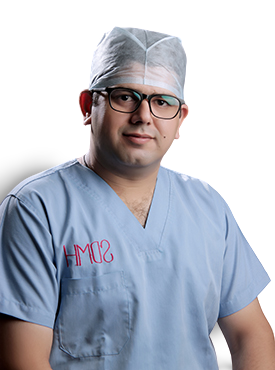
Dr. Harish Talreja performs unicondylar (partial) knee replacement at Manipal Hospital Jaipur — a leading orthopaedic specialist in Jaipur with extensive joint replacement expertise. The result is a more natural-feeling knee, smaller incision, and significantly faster return to daily life compared to total knee replacement.
5–8 cm vs 8–12 cm for total knee
Return to activities in 6–10 weeks
Healthy tissue and ligaments preserved
Shorter hospital stay, faster discharge
Unicondylar knee replacement (UKR) — also called partial knee replacement or unicompartmental knee arthroplasty — is a procedure in which only the single damaged compartment of the knee is resurfaced with an artificial implant.
The knee has three compartments: medial (inner), lateral (outer), and patellofemoral (front). In UKR, only the worn compartment — most commonly the medial — is replaced. The cruciate ligaments, healthy cartilage, and natural bone in the remaining compartments are completely preserved.
This targeted approach restores the knee's natural biomechanics more closely than total replacement — many patients describe their replaced knee as feeling more natural after UKR than after total knee replacement.
The inner compartment — most commonly affected by osteoarthritis. Medial UKR is the most frequently performed partial knee procedure.
The outer compartment. Lateral unicondylar replacement is less common but is performed for isolated lateral compartment arthritis.
The ACL, PCL and collateral ligaments are retained — enabling more natural joint mechanics and proprioception after surgery.
A femoral component and tibial baseplate with polyethylene insert are used — smaller and less disruptive than total knee implants.
Patient selection is the most critical factor in UKR success. A thorough clinical examination and weight-bearing X-rays — and MRI where needed — are essential to determine eligibility.
Isolated single-compartment knee osteoarthritis (usually medial)
Intact anterior cruciate ligament (ACL) confirmed on examination or MRI
Healthy cartilage in the opposite compartment and patellofemoral joint
Correctable varus or valgus deformity of less than 10–15 degrees
Good range of knee motion — at least 90–100 degrees of flexion
Full extension achievable (fixed flexion deformity less than 5–10 degrees)
Multi-compartment arthritis affecting two or three compartments
Absent or deficient ACL — the ligament is required for UKR stability
Significant fixed deformity greater than 15 degrees varus or valgus
Inflammatory arthritis (rheumatoid, psoriatic) affecting the whole joint
Significant patellofemoral arthritis with anterior knee pain
Severely limited range of motion or advanced fixed flexion deformity
Both procedures have excellent outcomes when performed on the right patient. Understanding the key differences helps patients make an informed decision with their surgeon.
Only the single damaged compartment is replaced
ACL, PCL and collateral ligaments fully preserved
Smaller incision (5–8 cm) and less blood loss
Shorter hospital stay — typically 2 to 3 days
Return to activities by 6 to 10 weeks
More natural-feeling knee after recovery
Convertible to TKR if arthritis progresses later
All three knee compartments are resurfaced
More extensive bone removal, larger implant
Larger incision (8–12 cm), more tissue disruption
Hospital stay typically 3 to 5 days
Full recovery over 3 to 6 months
Recommended for multi-compartment arthritis
Higher implant longevity — 15 to 20+ years
Not sure which is right for you? Book a consultation — Dr. Talreja will assess your X-rays and recommend the most appropriate procedure.
| Factor | Unicondylar (UKR) | Total Knee (TKR) |
|---|---|---|
| Compartments replaced | One only | All three |
| ACL requirement | Must be intact | Not required |
| Incision size | 5–8 cm | 8–12 cm |
| Blood loss | Lower | Moderate |
| Hospital stay | 2–3 days | 3–5 days |
| Walking without aids | 2–4 weeks | 4–6 weeks |
| Full recovery | 6–10 weeks | 3–6 months |
| Natural knee feel | ✓ Better preserved | Less natural feel |
| Implant longevity | 10–15+ years | 15–20+ years |
| Deformity correction | ✗ Limited | ✓ Full correction |
The procedure typically takes 1 to 1.5 hours under spinal or general anaesthesia. Most patients begin walking on the same day as surgery.
Weight-bearing X-rays, MRI (where needed), blood tests and anaesthesia review. Implant sizing planned to match the individual knee anatomy.
Spinal anaesthesia preferred. Smaller tourniquet and incision compared to total knee. Strict sterile technique throughout.
Only the worn bone and cartilage in the single damaged compartment are removed. A precisely fitted femoral and tibial component are implanted, preserving all healthy structures.
Wound closed in layers. Physiotherapy begins on Day 1 — standing, walking with support and early range-of-motion exercises start the same day.
For appropriately selected patients, unicondylar knee replacement offers distinct clinical advantages over total knee replacement.
Smaller incision, less tissue disruption and reduced blood loss compared to total knee replacement — enabling faster healing and less post-operative discomfort.
Return to daily activities, driving, and light work in 6 to 10 weeks — significantly faster than the 3 to 6 month total recovery required after TKR.
Preserving the ACL, PCL and healthy cartilage maintains the knee's natural proprioception — many patients report a more natural-feeling knee than after total replacement.
Only the damaged compartment is replaced — all healthy bone, cartilage and ligaments in the rest of the knee are completely preserved.
Smaller operative field means significantly less blood loss during surgery — reducing the risk of transfusion and aiding faster post-operative recovery.
Most patients are discharged in 2 to 3 days — a day or two earlier than after total knee replacement — allowing return home and recovery in familiar surroundings.
If arthritis progresses to other compartments in later years, unicondylar replacement can be converted to total knee replacement — the best outcome is not compromised.
Less bone is removed than in total knee replacement — a significant advantage, particularly for younger, more active patients who may require future surgery.
Patient selection is the cornerstone of successful UKR outcomes. Dr. Harish Talreja brings extensive joint replacement expertise, meticulous surgical planning, and a personalised rehabilitation approach to every partial knee replacement procedure.
Knee Replacements Performed
Years Orthopaedic Experience
Walking After Surgery
Book a consultation with Dr. Harish Talreja for an accurate assessment and a personalised recommendation — total or partial knee replacement — based on your X-rays, symptoms and lifestyle.
Shop No. 2/34, A Block
Vaishali Estate Township, Gandhi Path West
Jaipur – 302021
Book Appointment ›I had a good experience consulting with the doctor and he's really well mannered.
Feel free to pay us a visit. You won’t regret it for sure.